01Magnetars / coherent emission
Fast radio bursts from magnetars
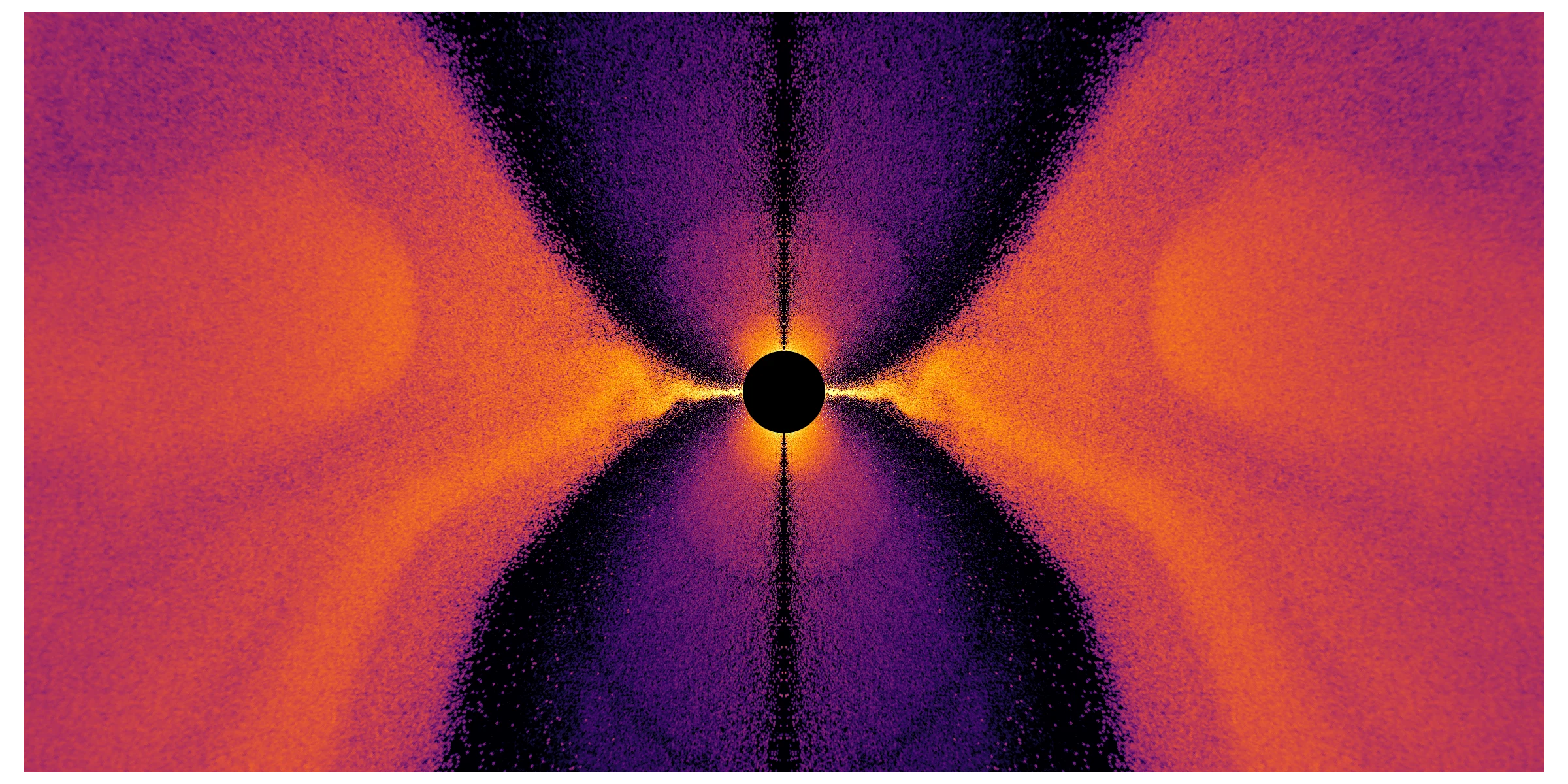
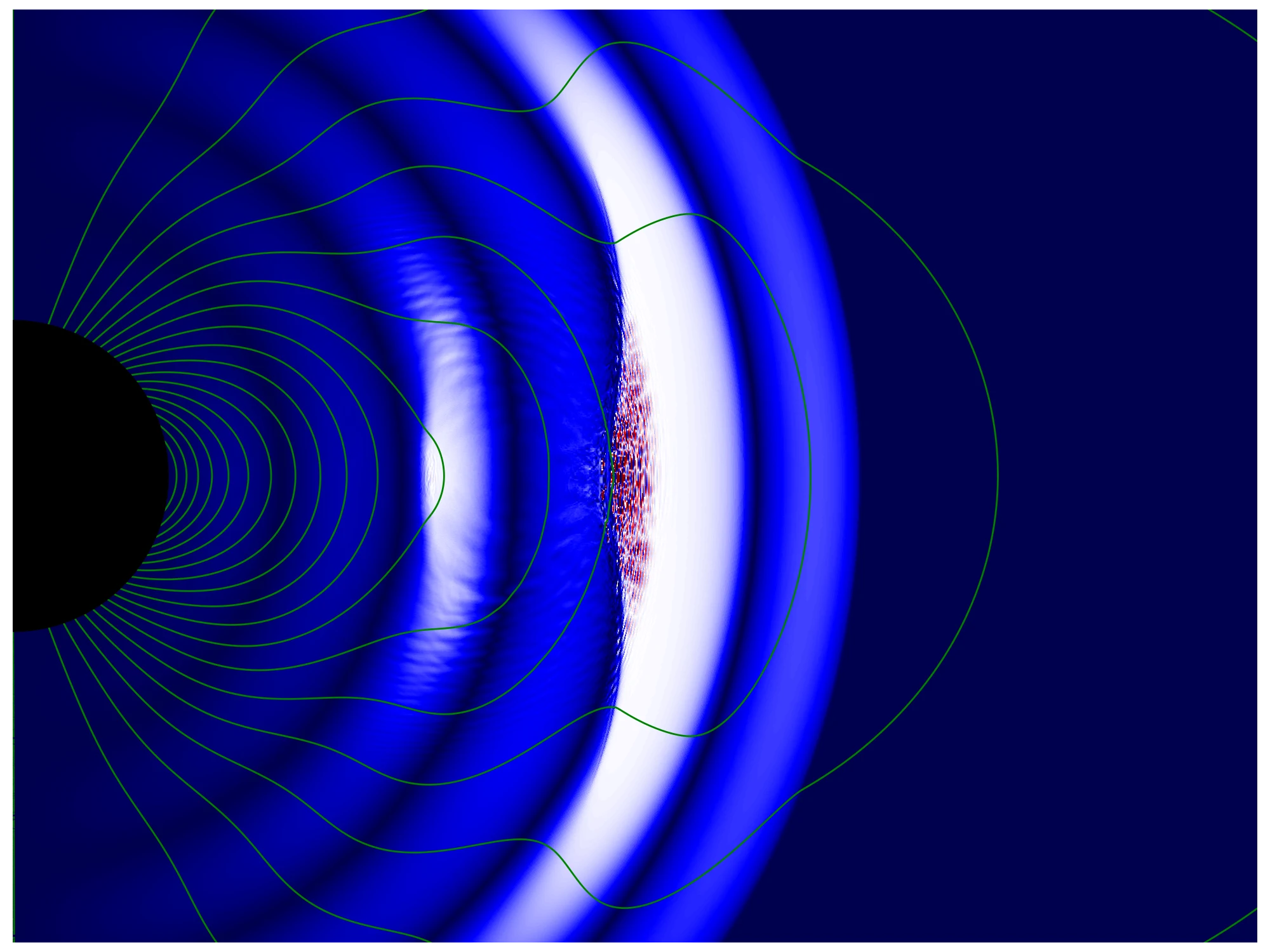
Magnetar activity launches waves into the magnetosphere, where their nonlinear evolution leads to shocks and coherent emission.
Explore this researchExtreme plasma astrophysics
We study collisionless plasmas around black holes and neutron stars, where strong gravity, rapid rotation, and intense magnetic fields create extreme conditions that give rise to relativistic outflows, energetic particles, and high-energy radiation.
01Magnetars / coherent emission
Magnetar activity launches waves into the magnetosphere, where their nonlinear evolution leads to shocks and coherent emission.
Explore this research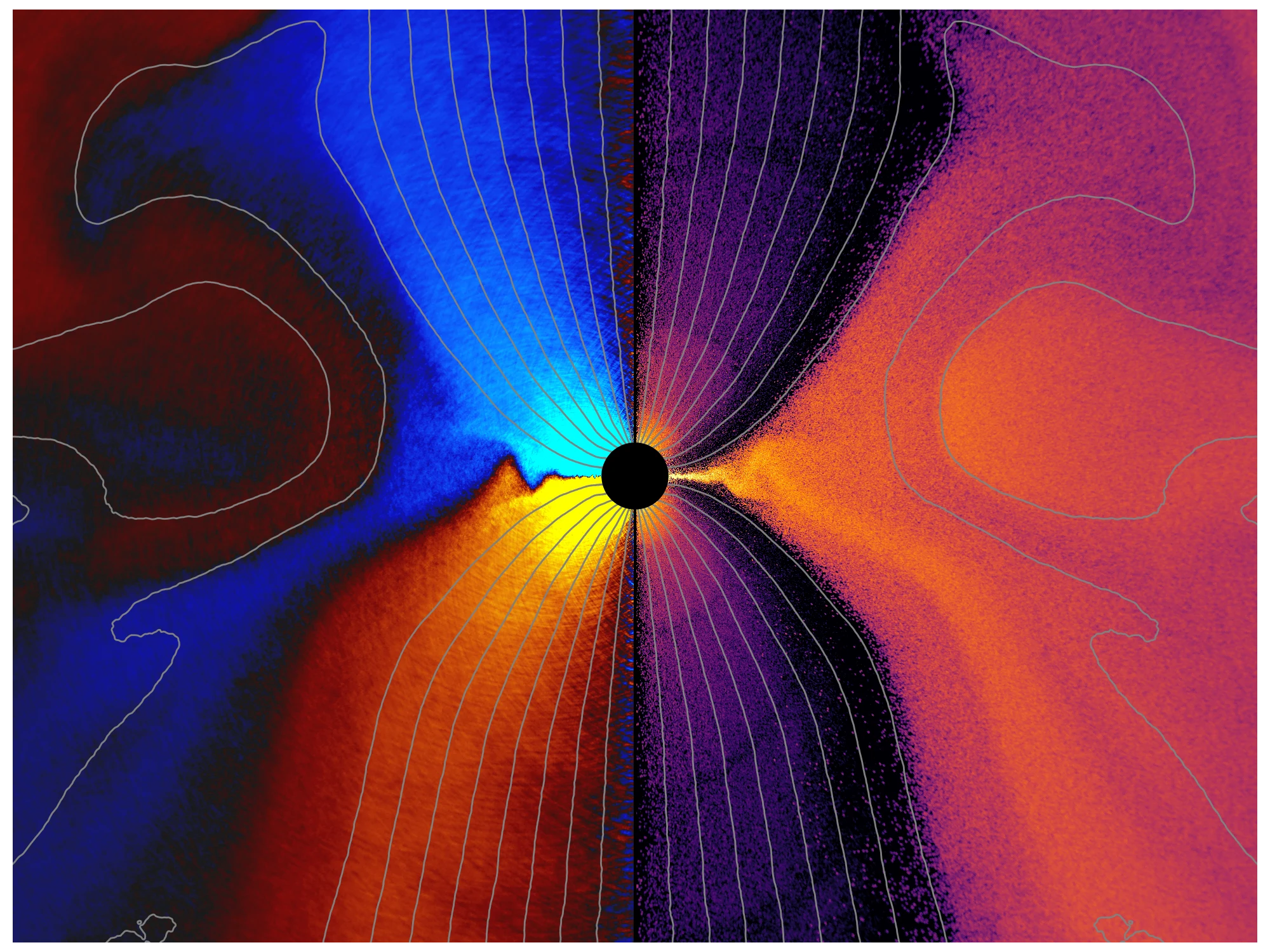
02Kinetic accretion / strong gravity
Global GRPIC simulations probe how collisionless plasma accretes onto spinning black holes and how the plasma is energized.
Explore this research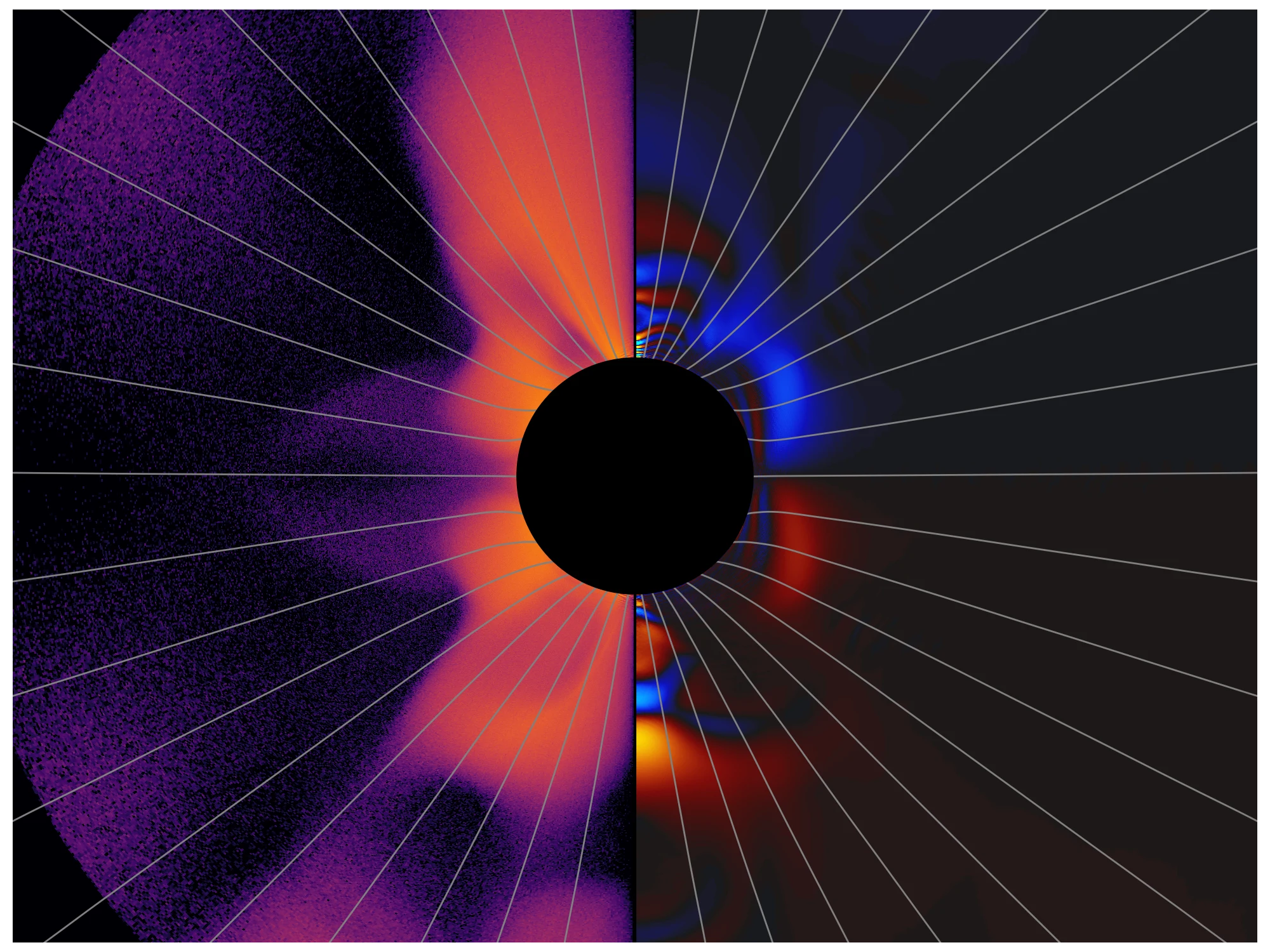
03Pair discharge / relativistic jets
We study how black-hole magnetospheres are supplied with plasma and how pair discharges regulate relativistic jet launching and dissipation.
Explore this research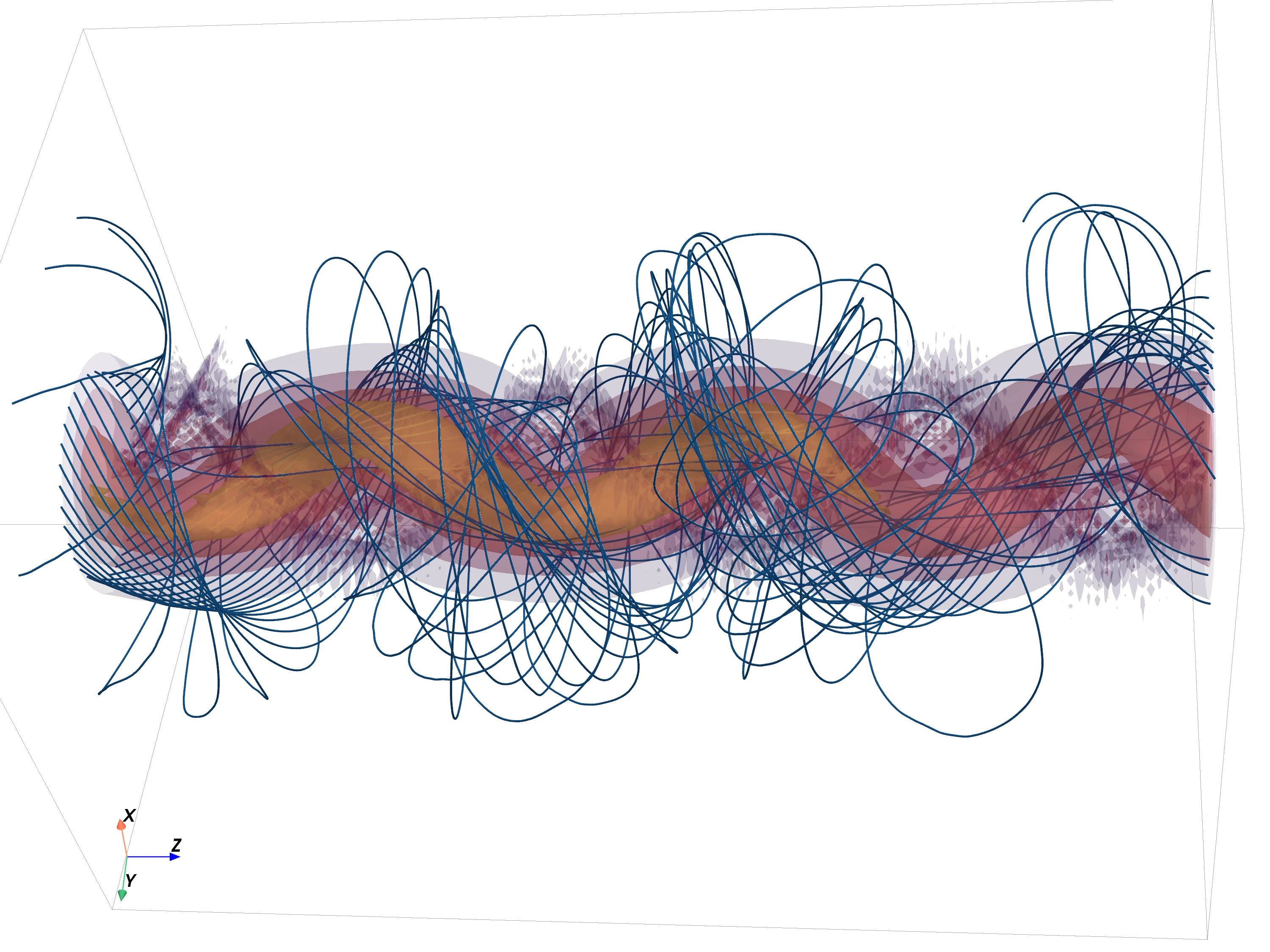
04Particle acceleration / flares
We study how relativistic plasmas convert flow and magnetic energy into particle kinetic energy and radiation in compact-object environments.
Explore this researchApproach
Depending on the physical problem, we use kinetic particle-in-cell simulations or fluid-level approaches such as force-free electrodynamics, alongside theory. Across our research, we investigate the global plasma dynamics of accretion flows, magnetospheres, and jets, as well as the kinetic processes that energize particles and produce radiation within these systems.
Together with our collaborator Alex Chen, we have developed GPU-accelerated plasma simulation codes, including the GRPIC code Aperture and the force-free code COFFEE. These tools make computationally demanding simulations of complex plasma dynamics practical at large scales.
Openings
We welcome students, postdocs, and collaborators interested in plasma physics, computation, and compact objects.